
Substation Superintendents and Project Managers: The Leaders Behind the Carolinas and Mid-Atlantic Grid Build
Why substation superintendents and project managers are the hardest grid hires in the Carolinas and Mid-Atlantic.
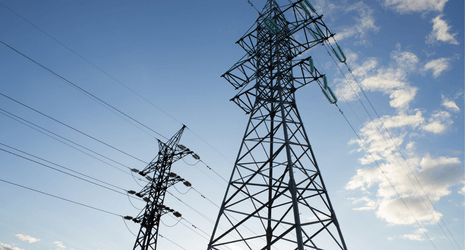
Every new transmission line starts as a set of drawings and finishes as a row of steel against the sky. Between those two points sits one of the most physically demanding and safety-critical jobs on the grid: transmission tower erection. Foundations get the attention because they set the schedule, and stringing gets the photographs because of the drones and helicopters. The crews who assemble and set the structures in between are often the ones a contractor runs short of first.
That gap is getting wider. More than 4,000 miles of new 765 kV line and 50 to 70 new substations are now planned across the US, with an estimated $55 to $60 billion of investment by 2032. Most of that extra-high-voltage mileage will be carried on lattice towers, a structure type many utilities have not built in volume for decades.
For much of the last 20 years, US transmission construction has been dominated by 69 kV to 345 kV lines on tubular steel monopoles. They are quick to set, they fit tighter rights-of-way, and plenty of crews know them well.
765 kV changes that. At those voltages, lattice towers are usually the practical choice, and they are a different job. A single lattice structure can arrive as hundreds of galvanised members and thousands of bolts. It has to be laid out, sorted, assembled on the ground in sections or as a full body, then lifted and set with a crane or built up piece by piece. Every connection needs torquing and checking before the structure is released for stringing.
Utilities are already planning around this shift. In a recent T&D World panel on tranche-scale transmission, Oncor described moving towards standard structure heights so its engineers design around materials already on hand, and separating 138 kV steel monopoles from 765 kV lattice structures in its program forecasts so manufacturers get a clearer demand signal for steel and labour. Oncor's first 765 kV construction is due to start next year. We covered the wider Texas picture in our article on 765 kV transmission in Texas, and the structure crews are where that program will feel the strain soonest.
The same T&D World panel was blunt about capacity. Joe Ebersbach of New River Electrical said labour, equipment and teams are "near 100% utilization today," and that he expects demand to outpace supply for the next three to five years. Midwest labour costs have spiked, and the sharpest gap is in project and construction management leadership.
The wider numbers point the same way. Goldman Sachs Research estimates the US power sector needs around 207,000 more transmission and grid connection workers to add 300 GW of capacity by 2030. The 2025 USEER found 59% of utility employers reported difficulty hiring line workers in 2024, and NCCER projects that about 41% of the current construction workforce will retire by 2031. Our earlier piece on T&D workforce retirements looks at that last figure in more detail.
Tower erection sits right in the middle of this. It draws on the same pool of journeyman lineworkers, crane operators and riggers that substation, distribution and data center contractors are all competing for.
A productive structure crew is more than a group of people who are comfortable at height. The roles that make or break a spread include:
They read the erection drawings, plan the assembly sequence, manage the yard and decide when a tower is ready to lift. A foreman who has run lattice work before is worth a great deal on a 765 kV job, because there are not many of them left.
These are the people bolting up steel at height, fitting crossarms and hardware, and completing connections after the lift. Lattice work in particular rewards climbers who are fast, methodical and disciplined about fall protection.
Setting a full tower body or a heavy monopole section means big cranes, often on soft ground and matting. Certified operators and qualified riggers who understand lift plans, tandem picks and wind limits are a constant pinch point. If you are short of operators across your earthworks too, our post on the heavy equipment operator shortage covers that side of the problem.
Sorting and staging thousands of members per structure is real work. A well-run laydown yard keeps the climbing crew moving, and a poorly run one stalls the whole line.
Bolt tension, member orientation and plumb all need to be verified and documented before stringing starts. Owner and contractor inspectors are part of the erection workflow, not an afterthought.
Contractors rarely struggle to find "construction workers" for tower erection. They struggle to find people with the right combination of voltage experience, structure type and travel tolerance. A strong monopole crew from a 138 kV rebuild is not automatically ready for a 765 kV lattice spread. The assembly sequence, the lift engineering and the sheer volume of steel are all different.
Travel is the other factor. Tower crews move with the line, often across rural regions with limited housing. Per diem, rotation patterns and the length of the program all shape who will say yes. Data center and substation work closer to home is pulling some of the same people away, a trend we explored in data centers competing for skilled labour.
A few practical steps help contractors and utilities stay ahead:
Plan structure crews alongside foundations, not after them. Foundation progress sets when erection can start. If the structure crew is hired once the first anchor bolts cure, you lose weeks.
Hire the foremen first. An experienced lattice foreman can bring in and train capable monopole climbers. The reverse rarely works.
Use a mix of permanent and project hires. Keep a core of permanent supervisors and senior hands, and scale the spread with temporary and contract labour as structures are released.
Recruit in batches. When a program needs several full crews at once, a multi-hire campaign is faster and more consistent than filling roles one at a time.
Build in apprentice capacity. Oncor's advice on the T&D World panel was to make sure rate structures leave room for apprentices and new entrants. Erection crews are one of the best places on a line job to develop the next generation, as we set out in our guide to growing your own lineworker bench.
InfraRec works with transmission contractors, EPCs and utilities to place structure foremen, journeyman lineworkers, crane operators, riggers and QA/QC inspectors on overhead transmission programs across the US, UK and beyond. We know the difference between a monopole rebuild and a 765 kV lattice spread, and we screen for it.
If you have structures arriving and crews to fill, talk to our transmission and distribution team about your program. Find out more about InfraRec, see how we support the wider substation and field services and testing market, or, if you build towers for a living, browse our latest transmission jobs.
Substation Superintendents and Project Managers: The Leaders Behind the Carolinas and Mid-Atlantic Grid Build
Why substation superintendents and project managers are the hardest grid hires in the Carolinas and Mid-Atlantic.
Transmission Tower Erection Crews: Who Will Raise the Steel for 4,000 Miles of 765 kV?
Lattice towers and steel monopoles are going up faster than crews can be found. What transmission tower erection really demands and how to staff it.
Horizontal Directional Drilling Crews: The Trenchless Skills Behind Underground Power
Underground power work is pushing demand for HDD operators, locators and mud techs. Why experienced drilling crews are scarce and how T&D contractors can hire.