
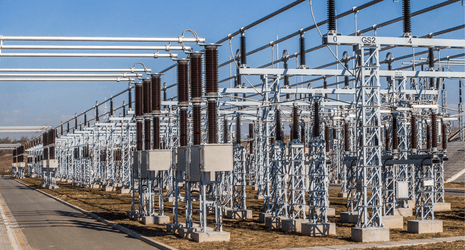
Substation Superintendents and Project Managers: The Leaders Behind the Carolinas and Mid-Atlantic Grid Build
Why substation superintendents and project managers are the hardest grid hires in the Carolinas and Mid-Atlantic.
When a new cable route has to pass under a river, a motorway, a rail line or a busy town centre, nobody digs a trench. They drill. Horizontal directional drilling (HDD) has quietly become one of the most important methods in modern transmission and distribution construction, and the crews who run the rigs are now some of the hardest people in the industry to hire.
This article looks at why demand for horizontal directional drilling crews is climbing on power projects, which roles are hardest to fill, and what contractors and utilities can do to secure drilling talent before their next crossing is on the critical path.
Three things are pulling HDD further into the power sector.
The first is undergrounding. Wildfire mitigation, storm hardening and planning constraints are moving more distribution and transmission cable below ground, and almost every underground route has at least one crossing where open cut is not allowed. We covered the civil side of this shift in our piece on undergrounding distribution lines, and HDD is the method that gets those routes past the obstacles.
The second is scale. Recent drills on transmission projects show how far the method has come. On the Champlain Hudson Power Express, Michels Trenchless completed two parallel bores of roughly a mile each under New York's East River, with a record 5,100 ft push installation of steel casing to protect the HVDC cable conduits. Crews averaged around 1,000 linear feet per 10-hour shift through urban fill and abrasive bedrock, according to Trenchless Technology. That is not entry-level work.
The third is cost. In June 2026, a UK Department for Energy Security and Net Zero study benchmarked trenchless methods against conventional cut-and-cover for underground transmission cables. It found that ploughing, HDD and microtunnelling were the only techniques with cost profiles comparable to cut-and-cover over 20 to 50 km routes, and that civil works costs could fall by as much as 66 to 72 percent in some scenarios. If findings like that shape network owner decisions on either side of the Atlantic, trenchless methods will take a bigger share of cable work, not a smaller one.
The HDD workforce does not belong to the power sector alone. Underground Infrastructure's 27th annual HDD survey, published in 2025, put fibre and 5G at 32.5 percent of HDD work, water at 21.7 percent and gas distribution at 17 percent, with electric at 15.1 percent and growing. Small rig contractors, mostly working in fibre and power, reported running near capacity.
That mix matters for anyone hiring. A drill operator in Texas or Ohio can choose between a broadband build funded by the $42.5 billion BEAD program, a water main replacement, a gas distribution job or a substation cable route. Each of those markets is busy at the same time, which means power contractors are bidding against several other industries for one small pool of experienced people.
The wider construction picture does not help. NUCA's 2025 labor backgrounder, cited by Trenchless Technology, estimated the industry needed 439,000 additional workers in 2025 beyond normal hiring and 499,000 more in 2026. Specialist trades like drilling sit right at the sharp end of that gap. The same pressure is showing up in related disciplines we have written about, from heavy equipment operators on earthworks to HV cable jointers who terminate the cable once it is pulled through.
A drilling crew is small, but every seat on it carries weight. When one person is missing, the rig often stops.
The operator steers the bore, controls the pilot hole, manages reaming passes and makes the calls when ground conditions change. Contractors repeatedly describe experienced operators as hard to find and expensive when they are available. Industry training programs, including Quanta Services' two-week course at its Lazy Q Ranch facility in Texas, aim to get new operators completing a 200 to 300 ft bore unaided. Long crossings under rivers and rail corridors need people with years of hours on the rig.
The locator walks the bore path with tracking electronics and feeds steering information back to the operator. On congested urban routes, or near existing high voltage assets, the locator is the person keeping the bore away from everything else in the ground. Good locators are often the bottleneck that limits how many rigs a contractor can run at once.
Drilling fluid design decides whether a bore holds open, whether cuttings come out and whether there is a frac-out into a watercourse. On environmentally sensitive crossings, a skilled mud tech protects both the schedule and the permit.
Larger crossings need foremen who can plan setups, manage pullback and coordinate with civils and cable teams, plus HDD design engineers who handle geotechnical review, bore profiles and stress calculations. These roles overlap with our project management and foundations and geotechnical networks, and they are among the most requested searches we run on underground programs.
HDD is a trade learned on the job. Even good formal programs only get people started. When IBEW Local 196 in Illinois launched its HDD classes, each course ran for two weeks with six students, mixing classroom work on OSHA excavation requirements and utility maps with hands-on rig time. Operators then needed a year of verified field experience before applying for a portable skills card. Before those classes existed, contractors there were adding crews faster than people could be trained.
That timeline is the core problem. You can buy a new rig in months. You cannot buy ten years of judgement on difficult ground. Contractors who win long crossings are the ones who already have, or can quickly secure, people who have done similar bores.
Hire ahead of the award. If a bid includes major crossings, line up your operator and locator before mobilisation. Drillers with power experience are rarely on the market for long.
Use flexible resourcing for peaks. Drilling work is lumpy. A temporary or contract operator can cover a crossing package without carrying a full crew year-round.
Build complete crews, not single hires. A rig needs an operator, locator, mud tech and labourers working together. Our multi-hire service is built for exactly that kind of team mobilisation.
Recruit across sectors. Fibre, water and gas drillers already understand the rig. With safety induction and some HV awareness training, many can move into power work. Our guide to moving from civil construction into utility T&D covers that transition in more detail.
Pair new operators with veterans. Whatever you invest in training, the fastest knowledge transfer still happens beside an experienced driller on a live bore.
InfraRec places drill operators, locators, mud technicians, HDD foremen and trenchless engineers with utilities, EPCs and specialist contractors working on underground transmission, distribution and substation cable routes. Whether you need one specialist for a river crossing or a full crew for a multi-year undergrounding program, our team can help.
Talk to our team about your drilling requirements, or browse current jobs if you are an HDD professional looking for your next project. You can also read more about InfraRec and the sectors we cover.
Substation Superintendents and Project Managers: The Leaders Behind the Carolinas and Mid-Atlantic Grid Build
Why substation superintendents and project managers are the hardest grid hires in the Carolinas and Mid-Atlantic.
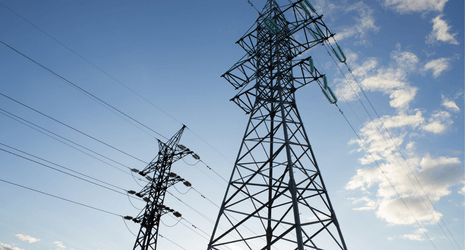
Transmission Tower Erection Crews: Who Will Raise the Steel for 4,000 Miles of 765 kV?
Lattice towers and steel monopoles are going up faster than crews can be found. What transmission tower erection really demands and how to staff it.
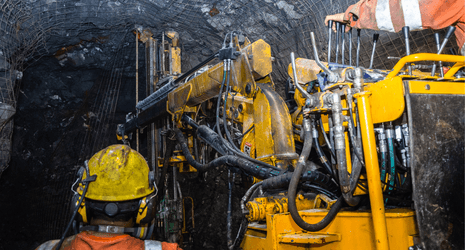
Horizontal Directional Drilling Crews: The Trenchless Skills Behind Underground Power
Underground power work is pushing demand for HDD operators, locators and mud techs. Why experienced drilling crews are scarce and how T&D contractors can hire.