Ask most people what's holding up new power projects in the US and they'll point to permitting or planning objections. The bigger bottleneck in 2026 is something far less visible: a queue. As of the end of 2025, roughly 8,200 projects were actively seeking grid interconnection in the US, representing 1,312 GW of generation and around 749 GW of storage. That's more capacity waiting to connect than the entire US grid currently generates.
For anyone working in transmission, distribution, or substation delivery, this queue isn't an abstract policy issue. It's the reason project timelines keep slipping and why transmission expansion has become the defining infrastructure challenge of the decade.
Five years to connect, sometimes twelve
The headline number that captures the scale of the problem is time. The median wait for a project to reach commercial operation is approaching five years, and for some categories, like large data center loads, delays can stretch to as long as twelve years. That's not a queue, it's effectively a moratorium on new capacity in the regions hit hardest.
The financial impact is just as severe. Interconnection costs, the grid upgrades a project has to fund to connect safely, now account for 30 to 37% of total project budgets in many cases. Combined with multi-year uncertainty, it's enough to kill projects outright: nearly 80% of new projects entering the queue withdraw before completion, largely because of unpredictable delays and the scale of grid upgrade costs they're asked to shoulder.
A queue that's shrinking, but for the wrong reasons
On paper, the queue actually got smaller in 2025, with total active queue volume down 10% year over year. That sounds like progress, but the composition tells a different story. Solar capacity in the queue fell 19%, storage fell 16%, and wind fell 19%, while active natural gas capacity jumped 86% to 253 GW. Developers of renewable and storage projects are withdrawing at a faster rate than new ones are entering, not because demand for clean power has dropped, but because the economics of waiting five-plus years with uncertain upgrade costs are becoming untenable for many projects.
Regional flashpoints
The pressure isn't evenly distributed. PJM Interconnection, the largest grid operator in the US, covering thirteen states and Washington DC, reopened its interconnection queue in 2026 after pausing new applications for years under the weight of backlog pressure. MISO, which spans fifteen states across the Midwest and South, has announced further delays affecting projects that entered the queue as far back as 2022.
Some grid operators are responding with large-scale transmission investment rather than just queue reform. SPP has approved a $7.7 billion plan to strengthen its transmission network in response to rising energy demand, a signal that operators increasingly see new transmission capacity, not just faster paperwork, as the real fix.
Why this is fundamentally a transmission and substation problem
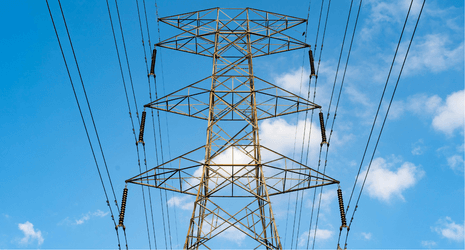
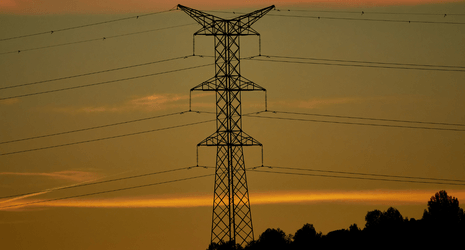
It's worth being precise about what's actually broken here. The queue backlog isn't primarily a generation problem, there's no shortage of developers wanting to build. It's a transmission and substation capacity problem. Every project in that queue needs system impact studies, network upgrades, and often entirely new substation infrastructure before it can connect safely. The pace at which grid operators and utilities can plan, design, and build that connecting infrastructure is what actually sets the speed of the queue.
That puts transmission planning engineers, substation designers, and interconnection study specialists at the center of whether this backlog clears or keeps growing. Expanding transmission capacity ahead of demand, rather than reactively study-by-study, is increasingly seen as the only way to meaningfully shorten these queues, which is why so much of the current infrastructure investment wave is being directed at grid reinforcement rather than generation alone.
What it means for the pipeline of work
For firms and professionals working across transmission, distribution, and substation delivery, the interconnection backlog is arguably the single biggest driver of near-term project volume. Every gigawatt sitting in a queue eventually needs system studies, upgraded lines, new or expanded substations, and protection schemes designed and commissioned before it can connect. The backlog isn't a sign of a slowing market, it's a forward indicator of just how much transmission and substation work is queued up behind it.
Firms that get ahead of this, building capacity in interconnection studies, transmission planning, and substation design now, will be well positioned as grid operators like SPP, PJM, and MISO push forward with the reinforcement plans needed to clear the backlog.
If you're building out teams across transmission, distribution, or substation delivery, get in touch with InfraRec or browse our current open roles. You can also read more about how we support clients across clean energy and infrastructure on our about us page.