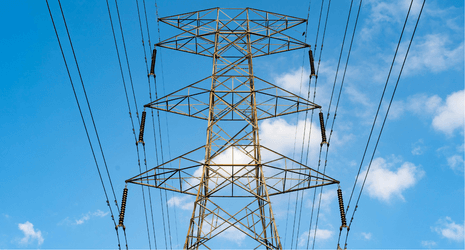
Utilities are spending more on the grid than at almost any point in living memory, and they still can't find enough people to build it. US utilities are projected to spend $259 billion this year and add 86 GW of new capacity, but the workforce behind that spending hasn't scaled with it. Over 90% of grid operators now say skills shortages are directly slowing project timelines.
This isn't a general engineering shortage. It's concentrated in a handful of disciplines that keep the grid running, and one role in particular is proving harder to fill than almost any other in power systems.
Relay protection engineers: the single hardest role to hire
Of all the specialist roles inside transmission and substation work, relay protection and system protection engineers have come out as the single hardest power-systems positions to fill, outstripping even substation civil engineers. These are the people who design and commission the protection schemes that stop a fault on one line from cascading into a regional outage. There's no substitute for the role and very little slack in the talent pool that can do it.
The problem compounds because protection engineering has a long training runway. It typically takes years of mentorship under experienced protection engineers to reach full competency, and firms can't shortcut that with a bootcamp or a certification course the way they might for some entry-level trades roles.
A workforce aging out faster than it's being replaced
The shortage sits on top of a demographic problem that's been building for a decade. There's a shortage of mid-career engineers with 5 to 15 years of experience, the exact band that should be stepping into senior protection and substation design roles, while roughly 30% of experienced electricians are nearing retirement. That combination leaves a thin middle layer supporting both the experienced engineers retiring out and the graduates coming in who aren't yet ready to lead complex substation projects.
Digital substations are making the skills gap worse, not better. Recent workforce studies across European grid operators found that over 60% of utilities report a material skills gap in SCADA, digital substations, and grid analytics. As substations move from electromechanical relays to IEC 61850 digital protection schemes, engineers need both the traditional power systems grounding and increasingly software-adjacent skills, a combination that's genuinely rare in the current talent pool.
The scale of the problem globally
This isn't isolated to one region. The global power sector will need between 450,000 and 1.5 million more engineers by 2030 to build and operate energy infrastructure, and 40% of power executives already report difficulty hiring skilled workers. In the US specifically, that shortage is most acute in transmission, substation, and distribution disciplines, which happen to be exactly where grid modernization investment is concentrated. Demand and supply are moving in opposite directions.
Why it matters beyond the engineering department
A stalled substation hire doesn't just delay one project. Protection and substation engineers sit on the critical path for interconnection studies, generator connections, and grid reinforcement work tied to renewables and data center load growth. When that role sits open for months, it backs up everything downstream of it, from commissioning schedules to the developers waiting on grid connection dates.
What's actually working for employers right now
Firms that are still closing these roles on reasonable timelines tend to share a few habits.
They're widening the net beyond utilities. Candidates from EPC contractors, OEMs, and even industrial plants with significant protection and controls work often transfer well into utility-side substation roles with the right onboarding, and they're an underused pool relative to how competitive utility-to-utility poaching has become.
They're investing in structured mentorship rather than waiting for fully-formed senior hires. Given how long it takes to develop a protection engineer from scratch, firms building their own internal pipeline through graduate schemes paired with senior mentors are insulating themselves from a market where senior talent simply isn't available to buy at any price.
They're being realistic about digital substation skills. Rather than requiring candidates to already have IEC 61850 and SCADA integration experience, some employers are prioritizing strong core protection fundamentals and building the digital layer through targeted training, since insisting on both from day one shrinks the candidate pool to almost nothing.
The bottom line
The transmission and substation talent shortage isn't a temporary blip tied to one project cycle, it's structural, driven by retirements, a thin mid-career bench, and a technology shift that's raising the skills bar at the exact moment supply is tightest. Relay protection and system protection engineers sit at the center of it, and firms that can't secure this talent risk becoming the bottleneck on their own grid investment.
If you're trying to fill substation, protection, or wider transmission and distribution roles, get in touch with InfraRec or take a look at our current open roles. You can also read more about how we support clients across clean energy and infrastructure on our about us page.