
Negotiating Your US Energy and Infrastructure Salary in 2026
Leaving money on the table is the most common mistake energy and infrastructure professionals make when accepting a new role.
If you've spent any time on a jobsite this year, you've probably noticed the pace has changed. Earthworks and site development crews aren't just building roads and subdivisions anymore, they're the first crews on some of the biggest energy and infrastructure projects in the country's history. Here's a look at what's driving the current boom, where the pressure points are, and what it means for anyone operating in this space.
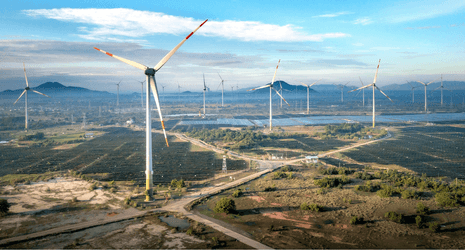
Data center construction has gone from a niche vertical to one of the biggest drivers of civil work in the country. Every hyperscale campus starts the same way: mass grading, pad prep, retention ponds, and miles of underground utility work before a single rack goes in. That demand is stacking on top of an already busy renewables pipeline, with utility-scale solar and wind projects requiring extensive site prep, access roads, and foundation work spread across huge footprints. Projects like the SunZia wind and transmission build in New Mexico, a multi-billion dollar undertaking, show the scale contractors are now operating at.
Add in continued investment in transmission infrastructure, pipelines, and traditional civil programs (bridges, dams, marine works), and you get a project pipeline that's expanding faster than the workforce and equipment fleets available to execute it. Industry data is showing double and triple digit growth in categories like general civil construction and dams/canals/marine work year over year. Demand isn't the problem right now. Execution capacity is.
The construction industry is short an estimated 350,000 workers this year, and the gap is most acute in exactly the trades earthworks depends on: grade checkers, dozer and excavator operators, pipe layers, and surveyors. Data center construction alone is projected to be short by close to half a million skilled workers nationally as AI-driven infrastructure spending accelerates faster than crews can be trained and mobilized.
This is showing up in real ways on the ground. Wages for experienced operators are climbing. Subcontractors are getting more selective about which jobs they bid, and pricing in more risk premium when they do. Schedule slippage tied to crew availability, not material lead times, is becoming one of the top reasons projects run long. Firms with a bench of qualified people, or a fast way to find them, have a genuine competitive advantage right now.
GPS and GNSS machine control, once the domain of large infrastructure players with deep capital budgets, is now standard equipment on everything from subdivision grading to major highway corridors. Automated grade control, GNSS-guided dozers and excavators, and real-time compaction monitoring are reshaping what a productive crew looks like. Manufacturers are increasingly building this into machines at the factory level rather than as an aftermarket add-on, which is lowering the barrier to entry but also raising the bar for what operators need to know.
That shift matters for hiring. The operators in highest demand today aren't just people who can run a machine, they're people comfortable working alongside digital grade models, GNSS positioning, and telematics systems. That's a different skill set than the industry was hiring for five years ago, and it's tightening an already thin labor pool further.
Civil earthworks sits right at the intersection of two of the fastest-moving sectors in US infrastructure: energy buildout and data center expansion. Contractors who can staff up quickly with people who understand both the traditional site work and the newer machine control technology are the ones winning bids and keeping schedules intact.
This is exactly the kind of market where having a recruitment partner who actually understands earthworks, energy infrastructure, and how the two now overlap makes a difference. Knowing the difference between a solar site grading job and a data center pad program, or what a transmission project actually needs from a site crew, isn't a small thing when you're trying to move fast on a hire.
The demand isn't slowing down in the second half of 2026. The question for most contractors isn't whether the work is there, it's whether they have the people to take it on.
Negotiating Your US Energy and Infrastructure Salary in 2026
Leaving money on the table is the most common mistake energy and infrastructure professionals make when accepting a new role.

Mastering Interviews for US Energy and Infrastructure Jobs in 2026
With multiple qualified applicants pursuing each opening across renewable energy, transmission and distribution, and infrastructure investment, the candidates who secure offers are those who prepare accurately - not just polish their resumes. This guide gives you the specific preparation framework that works in 2026.

Calculating the ROI of Specialist Recruitment in Energy and Infrastructure
This guide gives hiring managers and talent acquisition leads a practical framework for calculating and improving their Energy and Infrastructure recruitment ROI.