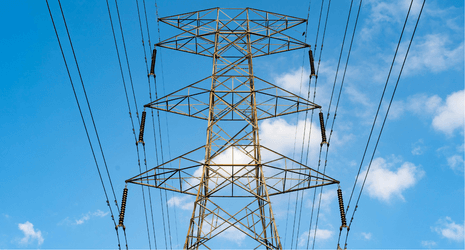
Every conversation about clean energy in 2026 eventually circles back to the same problem: there isn't enough power getting where it needs to go, and there aren't enough people qualified to fix that. The constraint isn't turbines, panels, or battery cells. It's the grid workforce shortage: too few skilled line workers, engineers, and technicians to build and maintain the network everything else depends on.
Utilities are planning the largest transmission and distribution buildout in decades. Data centers are pulling electricity demand upward faster than almost anyone forecast even two years ago. And the workers who splice cable, energize substations, and manage complex grid interconnections are in shorter supply than at any point in recent memory. For companies operating in power infrastructure, the grid workforce shortage isn't a future risk. It's already shaping project timelines this year.
The Numbers Behind the Grid Talent Crunch
The scale of the problem is now well documented. According to the US Department of Energy's 2025 United States Energy and Employment Report, 89% of construction employers in the transmission, distribution, and storage sector reported at least some difficulty finding qualified workers. That's not a niche staffing complaint, it's nearly nine in ten employers across an entire segment of the industry.
The demand side of the equation is just as striking. The Edison Electric Institute projects that investor-owned utilities in the US will spend $1.1 trillion on grid upgrades and expansions between 2025 and 2029. That figure covers everything from new transmission corridors to substation modernization, and every dollar of it depends on people who can physically do the work: linemen, grid connection engineers, protection and controls specialists, and substation technicians.
Why Data Centers Are Raising the Stakes
The traditional drivers of grid investment, renewables integration and ageing infrastructure replacement, haven't gone anywhere. But data center growth has added a new layer of urgency. Hyperscale facilities are being sited in regions where local grid capacity was never designed to support them, and utilities are racing to build interconnections fast enough to keep pace with demand.
That race is colliding directly with the labor shortage. Projects that would normally move through planning, permitting, and construction on a predictable timeline are now held up by the availability of qualified field crews and engineering talent. It's a dynamic increasingly covered by outlets like Power Magazine and Utility Dive, and one that mirrors what InfraRec sees directly in client conversations: it isn't capital holding projects back, it's people.
The Roles Under the Most Pressure
A few positions are proving especially difficult to fill in 2026:
Line workers and electricians. Skilled trades roles account for more than half of the total energy workforce, yet they consistently rank among the hardest to staff. Wages and overtime pay have climbed sharply in response, and utilities are competing directly with the construction and manufacturing sectors for the same limited talent pool.
Grid connection and interconnection specialists. As battery storage and renewables projects queue up for grid access, engineers who understand multi-jurisdiction interconnection processes are in especially short supply. This overlaps closely with hiring pressure in battery storage and utility-scale solar, where projects can't move forward without a viable path to the grid.
Substation and protection engineers. These roles require years of specialized training, and the pipeline of new entrants hasn't kept pace with retirements.
The workforce is also ageing out faster than it's being replaced. Advanced economies are seeing roughly 2.4 workers within ten years of retirement for every worker under 25 entering the energy sector, a ratio that puts long-term pressure on every subsector, from wind to transmission.
What This Means for Employers Hiring in 2026
For companies building or maintaining grid infrastructure, the takeaway isn't complicated, even if the fix is hard. Standard hiring channels aren't producing candidates fast enough, and job postings alone won't close a gap this size. Employers who are moving fastest right now are the ones treating recruitment as a strategic function rather than an administrative one: building relationships with passive candidates before a role opens, working with specialist recruiters who already have relationships across the skilled trades and engineering talent pool, and being realistic about compensation given how competitive the market for experienced workers has become.
This is exactly where a recruitment partner with deep sector knowledge earns its keep. Generalist staffing firms rarely have the networks needed to source line workers, interconnection engineers, or substation specialists at the pace the current market demands.
How InfraRec Can Help
InfraRec works exclusively across clean energy and infrastructure recruitment, which means our network is built for exactly this moment. Whether you're staffing a transmission expansion, a battery storage interconnection team, or a broader power sector build-out, we connect employers with vetted, experienced talent faster than a generalist search firm can.
If the grid workforce shortage is affecting your project timelines, get in touch with our team to talk about your hiring needs, or browse current opportunities if you're a candidate looking to move into one of the fastest-growing corners of clean energy. Learn more about how we work with employers on our client services page.
Frequently Asked Questions
What is causing the grid workforce shortage?
An ageing utility workforce, a shrinking pipeline of new tradespeople, and a sharp rise in grid investment driven by data centers and renewables interconnection are the main causes. Demand for skilled labor is growing faster than the supply of trained line workers and grid engineers.
Which jobs are hardest to fill in the utility sector right now?
Line workers, electricians, grid connection and interconnection engineers, and substation protection specialists are the roles utilities and contractors report struggling with most in 2026.
How are utilities responding to the line worker shortage?
Many are raising wages and overtime pay, expanding apprenticeship and training programs, and partnering with specialist recruiters to reach experienced candidates and passive talent that generalist job boards don't reach.